


Hey there! As a supplier of transparent film, I often get asked about the thickness range of common transparent films. So, I thought I'd write this blog to share some insights on this topic.
First off, let's talk about the different types of transparent films out there. There are quite a few, but some of the most common ones include polyethylene (PE) film, polypropylene (PP) film, polyester (PET) film, and Clear TPU Film. Each of these films has its own unique properties and applications, and their thickness can vary depending on what they're used for.
Polyethylene (PE) Film
PE film is one of the most widely used transparent films. It's known for its flexibility, moisture resistance, and low cost. There are two main types of PE film: low-density polyethylene (LDPE) and high-density polyethylene (HDPE).
LDPE film is usually thinner and more flexible. The thickness of LDPE film commonly ranges from about 0.01 mm (10 microns) to 0.2 mm (200 microns). It's often used for things like food packaging, garbage bags, and agricultural mulch. For example, those thin plastic bags you use to wrap sandwiches or fruits are typically made of LDPE film with a thickness of around 10 - 20 microns.

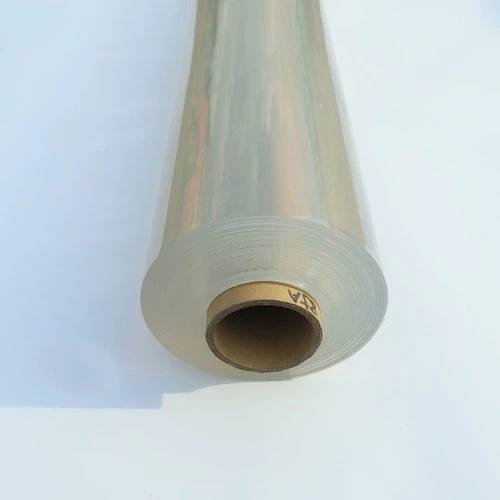
HDPE film, on the other hand, is thicker and more rigid. It can have a thickness ranging from 0.025 mm (25 microns) to 0.5 mm (500 microns). HDPE film is used in applications where more strength and durability are required, such as heavy-duty packaging for industrial products or in some cases, as a protective layer for construction materials.
Polypropylene (PP) Film
PP film is another popular choice. It has good clarity, high tensile strength, and is resistant to chemicals. The thickness of PP film generally falls between 0.015 mm (15 microns) and 0.25 mm (250 microns).
Biaxially oriented polypropylene (BOPP) film, which is a type of PP film, is commonly used in the packaging industry. It's often used for wrapping snacks, confectionery, and labels. BOPP film usually has a thickness in the range of 15 - 60 microns. This thickness provides a good balance between flexibility and strength, allowing it to be easily wrapped around products while still maintaining its integrity.
Polyester (PET) Film
PET film is known for its excellent mechanical properties, high transparency, and good heat resistance. The thickness of PET film can vary widely, from as thin as 0.006 mm (6 microns) to 0.5 mm (500 microns).
Thin PET films, around 6 - 25 microns, are often used in applications like flexible electronics, such as touchscreens and solar cells. These thin films need to be lightweight and flexible while still providing good electrical insulation and optical clarity.
Thicker PET films, in the range of 50 - 500 microns, are used for things like protective films for LCD screens, thermal insulation in buildings, and in some cases, as a base material for printing labels.
Clear TPU Film
TPU (Thermoplastic Polyurethane) film is a versatile material that combines the properties of rubber and plastic. Clear TPU film is highly elastic, has good abrasion resistance, and excellent clarity.
The thickness of clear TPU film typically ranges from 0.02 mm (20 microns) to 1 mm (1000 microns). Thinner TPU films, around 20 - 100 microns, are often used in applications like mobile phone screen protectors, where flexibility and clarity are crucial. Thicker TPU films, from 0.2 mm (200 microns) to 1 mm, can be used for things like protective covers for electronic devices, automotive interior trim, or in some medical applications.
Factors Affecting Film Thickness Selection
When it comes to choosing the right thickness of transparent film for a specific application, there are several factors to consider.
Strength and Durability: If the film needs to withstand a lot of handling, abrasion, or pressure, a thicker film is usually a better choice. For example, if you're packaging heavy industrial parts, you'll want a thicker PE or PP film to ensure that the product is well-protected during transportation and storage.
Flexibility: Some applications require the film to be highly flexible. In these cases, a thinner film is more suitable. For instance, if you're using the film for wrapping irregularly shaped objects, a thin LDPE or BOPP film will be able to conform to the shape easily.
Cost: Thicker films generally cost more than thinner ones. So, cost is often a major factor in the decision-making process. If you can achieve the desired performance with a thinner film, it may be more cost-effective to go with that option.
Optical Properties: In applications where clarity is important, such as food packaging or display applications, the thickness of the film can affect its optical properties. Thinner films usually have better clarity, but in some cases, a slightly thicker film may be needed to achieve the right balance between clarity and other properties like strength.
Why Choose Our Transparent Films
As a transparent film supplier, we understand the importance of providing high-quality films with the right thickness for your specific needs. We offer a wide range of transparent films in different thicknesses and materials to meet the diverse requirements of our customers.
Our films are manufactured using the latest technology and high-quality raw materials, ensuring excellent performance and consistency. Whether you need a thin film for flexible electronics or a thick film for heavy-duty packaging, we've got you covered.
We also provide excellent customer service. Our team of experts is always ready to help you choose the right film and thickness for your application. We can offer technical support, samples for testing, and customized solutions to meet your specific requirements.
Contact Us for Procurement
If you're interested in purchasing transparent films or have any questions about the thickness range or other aspects of our products, don't hesitate to get in touch with us. We're here to assist you in finding the perfect film for your needs. Whether you're a small business looking for a cost-effective packaging solution or a large corporation in need of high-performance films, we can work with you to provide the best products and services.
Let's start a conversation and see how we can help you with your transparent film requirements. We look forward to hearing from you!
References
- Modern Plastics Encyclopedia. McGraw-Hill.
- Packaging Technology and Science Journal.
- Handbook of Polymer Films. Wiley.


